
TL;DR:
- Certified pre-owned cars undergo strict manufacturer inspections and typically have warranty coverage from the original in-service date.
- CPO warranties mainly cover powertrain for five to seven years and limited bumper-to-bumper for one to two years.
- Buyers should verify warranty start dates, understand exclusions, and not assume full coverage or negotiate the premium price effectively.
Buying a certified pre-owned vehicle feels like a smart middle ground between brand-new and straight used. You get a car that has been inspected, comes with some warranty protection, and typically costs less than rolling off the lot in something fresh. But a surprising number of buyers walk away assuming their CPO warranty works like a full factory coverage plan, covering everything from a cracked taillight to a failed transmission. That assumption can get expensive. This guide breaks down exactly what a certified pre-owned warranty covers, what it skips, what perks come bundled in, and how it compares to other options you might consider.
Table of Contents
- What makes a certified pre-owned car special?
- Certified pre-owned warranty coverage: What's included and what's not
- Extra perks: Beyond basic coverage
- CPO vs. traditional extended warranties: Risk, value, and negotiation
- What most buyers miss about certified pre-owned warranty decisions
- Explore your warranty options for maximum protection
- Frequently asked questions
Key Takeaways
| Point | Details |
|---|---|
| Rigorous CPO inspections | Certified pre-owned cars undergo thorough 100-200+ point inspections to ensure reliability. |
| Extended warranty coverage | CPO warranties typically offer longer powertrain coverage and limited bumper-to-bumper benefits. |
| Value comes with premium | CPO vehicles cost more but are statistically less likely to have problems versus standard used cars. |
| Extra perks offered | Many CPO programs include roadside assistance, maintenance, and history reports—ask for specifics. |
| Critical to negotiate | Smart buyers research reliability and negotiate, since CPO premiums are often built into prices. |
What makes a certified pre-owned car special?
Most people have a vague sense that CPO means "inspected and approved." That is basically true, but the details matter a lot more than the marketing language.
A certified pre-owned vehicle is a used car that has passed a manufacturer-approved inspection process and meets specific eligibility requirements. Those requirements typically include age limits (usually no more than five or six model years old), mileage caps (often under 80,000 miles), and a clean title history. Each automaker runs its own CPO program with its own standards, so what qualifies as "certified" at a Toyota dealership is different from what qualifies at a BMW dealership.
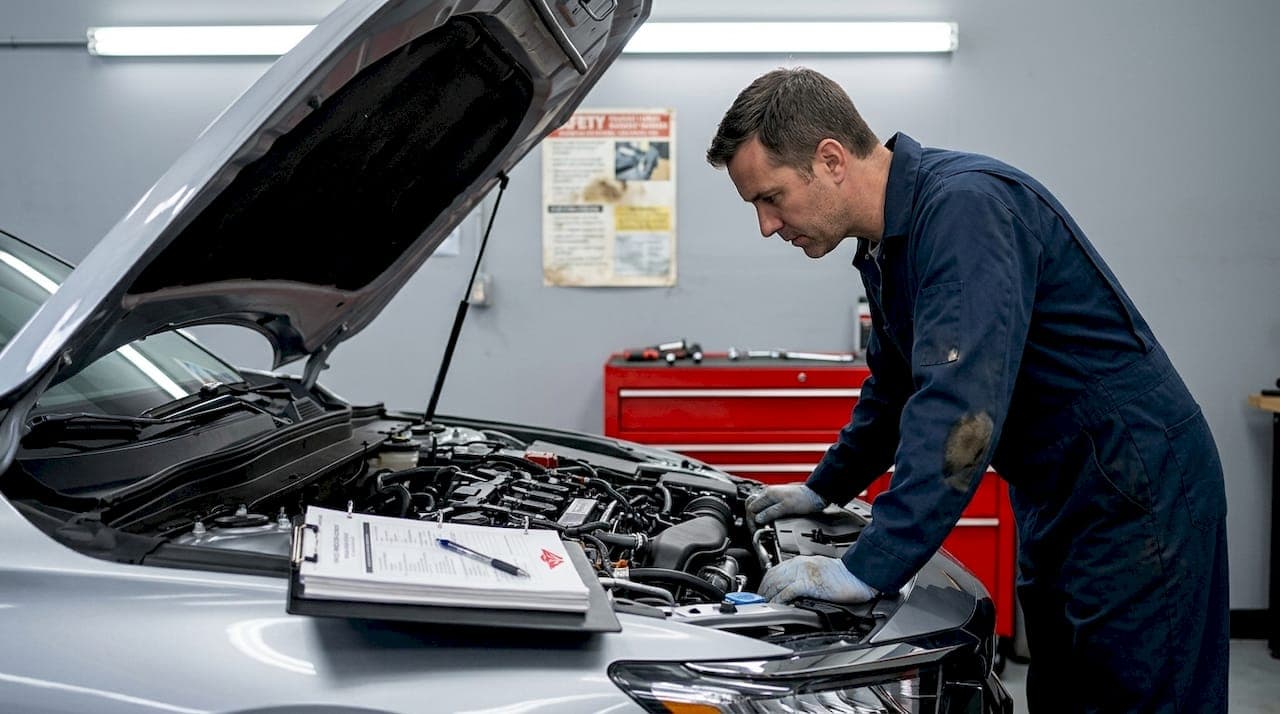
The inspection itself is thorough. Most manufacturer CPO programs require a multi-point inspection covering:
- Mechanical systems: Engine, transmission, drivetrain, brakes, steering, suspension
- Safety systems: Airbags, seatbelts, lights, tires, windshields
- Electrical systems: Battery, charging, infotainment, sensors
- Interior condition: Upholstery, controls, HVAC, glass
- Exterior condition: Body panels, paint, trim, frame integrity
CPO vehicles undergo rigorous inspections before certification and must meet strict criteria set by the manufacturer. This is not the same as a dealer giving the car a once-over before listing it.
That inspection process has measurable results. CPO vehicles report 14% fewer problems than comparable non-certified used cars, which is a meaningful reliability edge. The tradeoff is price: CPO vehicles cost 1.8 to 5% more than similar non-certified used cars on the same lot. Whether that premium is worth it depends on coverage, reliability research, and the specific vehicle.
For buyers thinking beyond the CPO term, understanding warranty after factory coverage becomes critical once the CPO period ends. And making smart warranty selections based on your vehicle's model year can save you thousands.
Certified pre-owned warranty coverage: What's included and what's not
Understanding what makes a CPO car special leads straight into the specifics of the warranties attached to these programs.
CPO warranties generally fall into two tiers. Knowing both is essential before signing anything.
Powertrain coverage protects the core mechanical components: engine, transmission, and drivetrain. This is the more durable, longer-lasting layer of coverage. Bumper-to-bumper coverage (also called limited comprehensive coverage in CPO language) covers a broader range of systems but comes with a shorter duration.
CPO warranties typically extend the original factory warranty, often providing powertrain protection for five to seven years or 100,000 miles, and limited bumper-to-bumper coverage for one to two years or 12,000 to 24,000 miles. Here is how several major brands structure their programs:

| Brand | Powertrain coverage | Limited/bumper-to-bumper |
|---|---|---|
| Acura | 7 years / 100,000 miles | 1 year / 12,000 miles |
| Nissan | 7 years / 100,000 miles | 1 year / 12,000 miles |
| Audi | 5 years / 100,000 miles (unlimited mileage option) | 2 years unlimited |
| Toyota | 7 years / 100,000 miles | 1 year / unlimited mileage |
| Chevrolet | 6 years / 100,000 miles | 1 year / 12,000 miles |
One of the most commonly missed facts in any CPO transaction involves the coverage start date. Read this carefully:
CPO warranty coverage begins from the vehicle's original in-service date, not from the date you purchase it as a CPO buyer.
That distinction is significant. If you buy a CPO vehicle that was originally sold two years ago, you are already two years into the warranty clock even though you just drove it off the lot. A car with a seven-year powertrain warranty already has two years counted against it, leaving you five years of actual remaining coverage.
Here is a practical process for verifying your CPO warranty before you commit:
- Request the original window sticker or factory build sheet to confirm the original in-service date
- Pull a vehicle history report (Carfax or AutoCheck) to verify the ownership timeline
- Contact the manufacturer directly with the VIN to confirm active warranty status
- Ask the dealer to show you the actual CPO certification paperwork, not just a sticker on the windshield
- Review the deductible terms, since some CPO programs have $100 to $200 per-visit deductibles
Pro Tip: Before purchasing, call the manufacturer's customer service line with the VIN number. They can tell you exactly what warranty remains and from what date. This takes five minutes and can save you from a very unpleasant surprise six months later.
CPO warranties also carry exclusions that buyers routinely overlook. Wear items like brake pads, wiper blades, and tires are almost never covered. Cosmetic damage, glass, and damage from misuse or accidents fall outside the warranty scope too. For a full breakdown of what gets covered versus excluded, the bumper-to-bumper vs. powertrain comparison is worth reading before you negotiate.
Getting familiar with extended vehicle warranty details also helps when CPO terms feel unclear. And a clear coverage guide can help you ask the right questions at the dealership.
Extra perks: Beyond basic coverage
After exploring what warranties cover and exclude, let's look at the perks that often sweeten CPO deals.
CPO programs are not just about repair coverage. Many manufacturer programs bundle in a set of extras that, when added up, represent real value. CPO programs frequently include perks like:
- Roadside assistance: Towing, flat tire service, battery jump-starts, and fuel delivery, usually active for the duration of the powertrain warranty
- Rental or loaner reimbursement: Coverage for a rental vehicle while your car is being serviced under warranty
- Trip interruption coverage: Reimbursement for hotel stays, meals, and transportation if your car breaks down more than a set distance from home (often 100 to 150 miles)
- Free maintenance or oil changes: Some programs (Honda, Hyundai, and Kia notably) include a set number of complimentary oil changes or scheduled maintenance visits
- Vehicle history reports: Most programs provide a Carfax or equivalent report as part of the CPO process
These perks differ significantly between programs. Luxury brands like Lexus and BMW often bundle more robust packages, including complimentary scheduled maintenance for a year or more. Budget-friendly brands may offer only basic roadside assistance.
Manufacturer-backed CPO programs are worth more than dealer-certified programs. When a manufacturer certifies the vehicle, the warranty is underwritten and backed by the company itself. When a dealer offers their own "certified" label, that certification is typically less regulated, may lack manufacturer involvement, and the warranty could be provided by a third-party administrator with varying financial stability.
Always ask this direct question: "Is this a manufacturer CPO program or a dealer certification?" If it is dealer-only, treat it like any other used car purchase and do your own due diligence.
Pro Tip: Confirm whether roadside assistance is nationwide and whether it covers you as the driver or the vehicle specifically. Some programs only cover roadside calls tied to warranty-covered failures, not general breakdowns.
When comparing what features genuinely protect you, look at must-have warranty features that give drivers real peace of mind versus those that are mostly marketing.
CPO vs. traditional extended warranties: Risk, value, and negotiation
Those perks sound great, but how do CPO warranties really stack up against other options?
CPO warranties and traditional extended warranties both aim to reduce out-of-pocket repair costs, but they operate very differently.
| Feature | CPO warranty | Traditional extended warranty |
|---|---|---|
| Backed by | Manufacturer | Manufacturer or third party |
| Inspection required | Yes, strict multi-point | Typically no |
| Coverage flexibility | Set by program | Customizable tiers |
| Transferability | Usually yes | Varies by provider |
| Negotiability | Limited | Often negotiable |
| Deductible | $0 to $200 per visit | $0 to $200 per visit |
| Third-party risk | None (manufacturer) | Varies significantly |
CPO programs offer lower risk compared to extended warranties on non-CPO vehicles, but they are not true bumper-to-bumper coverage. The fine print matters more than the label. Traditional extended warranties provide more flexibility, but the quality varies wildly depending on the provider. Some third-party warranty companies have weak financial backing, slow claims processing, and narrow definitions of what qualifies as a covered failure.
For negotiating your CPO purchase, use these steps:
- Research the vehicle's reliability ratings through Consumer Reports and J.D. Power before you visit the lot
- Get the complete CPO inspection checklist and review it item by item
- Use the coverage start date to negotiate the purchase price, since an older CPO car has less warranty remaining
- Ask whether the CPO premium (that 1.8 to 5% price increase) can be reduced if remaining coverage is limited
- Request that roadside assistance and perks be confirmed in writing as part of the certified package
Pairing CPO purchases with reliability research gives you the most useful negotiating data. A highly reliable model with a strong CPO warranty is a legitimate value. A vehicle with a spotty reliability record and only six months of limited coverage left is a gamble regardless of the CPO label.
Third-party extended warranties can fill the gap once CPO terms expire. But choose carefully. Look for transferable plans backed by reputable administrators, with clear claims processes and nationwide repair network access. The auto warranty basics guide walks through what to look for when evaluating any extended warranty option.
What most buyers miss about certified pre-owned warranty decisions
Having compared different warranty types, here is our candid take on what actually separates smart CPO buyers from disappointed ones.
Most buyers focus on the headline number. "Seven-year, 100,000-mile warranty" sounds impressive. But very few buyers do the math on how much of that coverage actually remains at the time of purchase. A three-year-old CPO vehicle with a seven-year powertrain warranty has four years left. If it is a lower-mileage vehicle, that math still works in your favor. But if that same vehicle already has 65,000 miles on it, you may hit the 100,000-mile cap before the clock runs out.
The start date issue is not a technicality. It is the single biggest misunderstanding in CPO purchases, and dealers are not always eager to clarify it unprompted.
We also notice that risk-averse buyers often overweight the CPO label and underweight reliability research. A certified Jeep with a seven-year warranty and a historically problematic transmission is still a vehicle with a problematic transmission. The warranty reduces your financial risk, but it does not change the underlying mechanical picture. Pair the certification with model-specific owner data, forum reviews, and independent reliability rankings.
Negotiation is another area where buyers leave money behind. Because CPO vehicles carry a built-in premium, buyers often feel the price is non-negotiable. It is not. The premium reflects the certification, inspection, and warranty. If the remaining warranty is limited, that premium should reflect it. Push back with data.
Understanding warranty after factory coverage is also worth your time before you close the deal. Knowing what happens after the CPO term ends helps you plan for the full ownership cycle, not just the first year or two.
The bottom line from our perspective: CPO is a strong product when you know exactly what you are buying. When buyers treat the certification as a blanket guarantee rather than a structured, time-limited benefit, they end up frustrated. Read the actual warranty document. Ask about the start date. Do the reliability research. And think about what happens when the CPO coverage runs out.
Explore your warranty options for maximum protection
Understanding CPO coverage is a great first step, but the vehicle's warranty needs do not stop when the factory or CPO term expires. Whether your certified pre-owned car is approaching the end of its manufacturer coverage or you want to extend protection from day one, it is worth knowing exactly what options are available to you.
At RPM Warranty, we offer tailored extended warranty plans built for real vehicle owners, not generic coverage that leaves you guessing. Our Elite, Advanced, and Essential plans cover engines, transmissions, electrical systems, cooling components, and high-tech parts with nationwide repair network access and straightforward claims support. Ready to see what fits your vehicle and budget? Get a free quote today and know exactly what protection you have before you need it.
Frequently asked questions
What does a certified pre-owned warranty typically cover?
CPO warranties typically cover powertrain components for five to seven years or 100,000 miles, plus limited bumper-to-bumper coverage for one to two years, but exclusions for wear items and cosmetic damage are standard.
How is a certified pre-owned warranty different from a regular extended warranty?
CPO warranties are manufacturer-backed and require strict inspection and history verification, while traditional extended warranties are often issued by third-party providers with varying levels of regulation and financial stability.
Are certified pre-owned warranties worth the premium cost?
CPO vehicles cost 1.8 to 5% more but report 14% fewer problems than standard used cars, so the value depends on remaining coverage, the vehicle's reliability history, and how well you negotiate the purchase price.
Do all certified pre-owned programs offer roadside assistance and extra perks?
Most CPO programs include perks such as roadside assistance and vehicle history reports, but the scope of extras like rental reimbursement, trip interruption, and free maintenance varies widely by manufacturer and program tier.
How can I verify the warranty coverage start date for a certified pre-owned car?
Use the vehicle history report and the VIN to confirm with the manufacturer directly, because coverage begins from the original in-service date and not from when you purchase the car as a CPO buyer.
Recommended
- Automotive warranty transparency: Clear coverage guide
- Must-have car warranty features for peace of mind
- Extended Vehicle Auto Motorcyle Warranty | Trusted By All Dealers Nationwide
- Extended Vehicle Auto Motorcyle Warranty | Trusted By All Dealers Nationwide
- Aukcja Copart: jak działa i jak bezpiecznie kupić auto