
TL;DR:
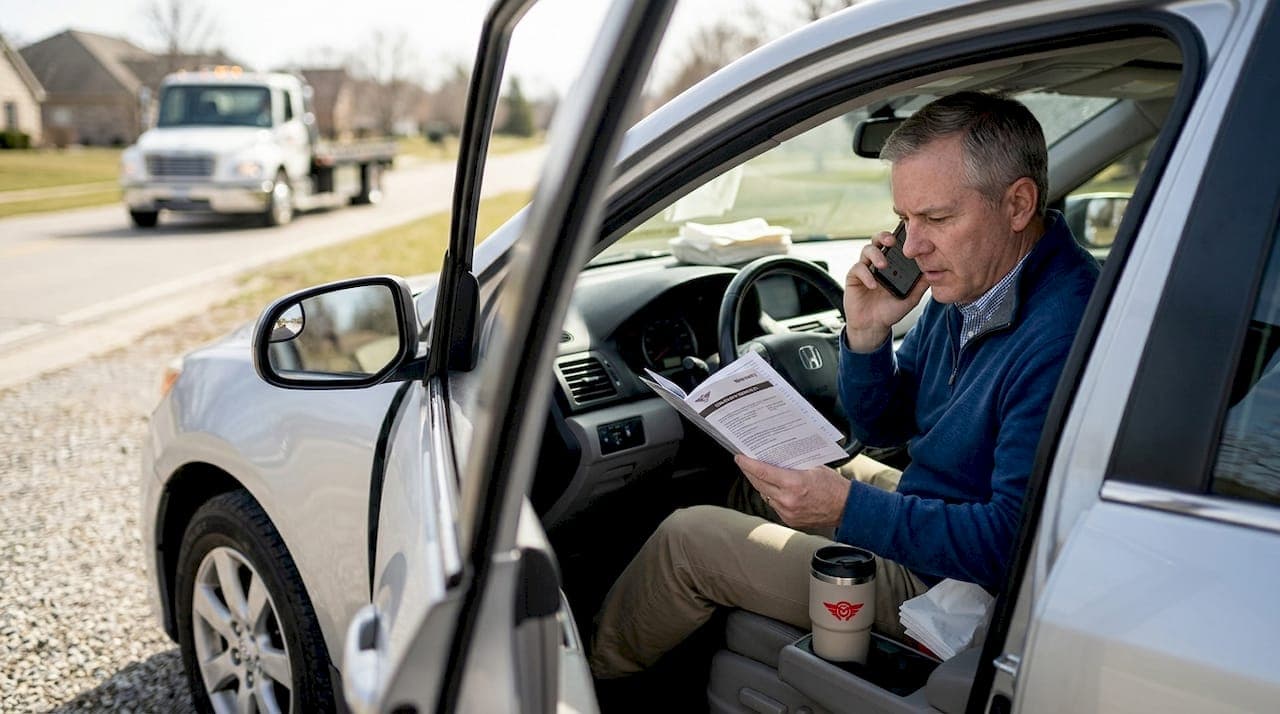
- Roadside assistance fills crucial gaps in extended warranties by covering emergencies like towing and lockouts.
- Including roadside in your plan saves money and reduces stress during common roadside incidents.
- It is especially beneficial for older, high-mileage, or long-distance drivers needing reliable emergency support.
How Roadside Assistance Enhances Extended Car Warranties
Most vehicle owners assume their extended warranty kicks in whenever something goes wrong with their car. But there's a common and costly misconception here: extended warranties are built primarily to cover mechanical repairs, not emergencies like being locked out of your car at 11 PM or running out of gas on a rural highway. Roadside assistance fills that gap. When it's bundled into your extended warranty plan, it transforms what was once a repair-only policy into a true safety net for real-world driving situations. This guide breaks down exactly what roadside coverage includes, what it costs to skip it, and how to decide if bundled protection is right for you.
Table of Contents
- What does roadside assistance in warranties actually cover?
- How does roadside assistance save you money and hassle?
- Comparing roadside: Warranty-bundled vs. AAA vs. insurance add-ons
- Who benefits most and how do you maximize roadside coverage?
- The overlooked reality: Why roadside assistance in warranties matters more than you think
- Ready to add peace of mind with the right warranty?
- Frequently asked questions
Key Takeaways
| Point | Details |
|---|---|
| Covers real emergencies | Roadside assistance in warranties helps with towing, lockouts, flat tires, and more—not just repairs. |
| Saves money and stress | Bundled roadside avoids costly per-incident charges and delivers peace of mind for owners. |
| Compare your options | Know the pros, cons, and limitations of warranty, AAA, and insurance add-on plans. |
| Best for older vehicles | High-mileage or aging cars benefit most from integrated roadside support in extended warranties. |
What does roadside assistance in warranties actually cover?
Before getting into the value of roadside assistance, it helps to understand the difference between what it covers and what a standard extended warranty addresses. A typical extended warranty pays for the repair or replacement of mechanical and electrical components when they fail due to normal wear. Roadside assistance, on the other hand, covers the moment before your car reaches a shop. It handles the emergency on the side of the road, not the repair afterward.
The vehicle protection features included in roadside plans vary by provider, but most bundled programs offer a consistent set of core services:
- Towing: Your vehicle gets towed to the nearest qualified repair facility, typically within a 15 to 100 mile radius depending on the plan.
- Battery jump-start: A technician comes to you if your battery dies, getting you back on the road without a tow.
- Flat tire assistance: A spare tire is mounted on-site, or the vehicle is towed if no spare is available.
- Emergency fuel delivery: Gas or diesel is brought to your location. Note that most plans cover the service fee, not the cost of the fuel itself.
- Lockout assistance: A locksmith or technician unlocks your vehicle if you lose your keys or lock them inside.
- Winching: If your car slides off the road, into a ditch, or gets stuck in snow or mud, winching service pulls it back onto the road.
According to industry data, these core services include towing to the nearest repair facility (often limited to 15 to 100 miles), battery jump-start, flat tire assistance, emergency fuel delivery (fuel cost extra), lockout assistance, and winching from ditches or snow.
Here's a quick reference table showing what typical warranty roadside assistance covers versus what it usually does not:
| Service | Typically Covered | Common Limitations |
|---|---|---|
| Towing | Yes | Mileage cap (15-100 miles) |
| Battery jump-start | Yes | One incident per occurrence |
| Flat tire change | Yes | Spare must be available |
| Emergency fuel delivery | Yes (service only) | Fuel cost paid by owner |
| Lockout assistance | Yes | May limit call frequency |
| Winching | Yes | Off-road exclusions may apply |
| Rental car during tow | Varies | Often a plan add-on |
| Trip interruption reimbursement | Varies | Distance minimums often apply |
The fine print matters here. Some plans charge a per-incident fee, while others cover all incidents under one annual flat rate. Pay close attention to mileage caps on towing because a 15-mile limit won't do you much good on a remote highway far from any repair shop. Reviewing the must-have warranty features section of your plan before signing is critical to avoiding surprises.
Pro Tip: Always ask your warranty provider to walk you through the roadside assistance section specifically. Request a sample claims scenario so you understand exactly who to call, how reimbursement works, and whether services are dispatched directly or require upfront payment from you.
How does roadside assistance save you money and hassle?
Once you understand what's included, the next question is simple: is it actually worth adding to your warranty? The numbers speak clearly here.
In 2024, AAA handled over 27 million roadside calls nationwide, with approximately 13 million towing incidents accounting for 48% of calls, and 7 million battery issues making up another 26%. That volume tells you something important: roadside emergencies are not rare events. They happen constantly, to all kinds of drivers.
Now consider the out-of-pocket costs. A single tow costs around $109 on average without coverage. Longer tows can run $200 to $350 or more. A locksmith call ranges from $75 to $150. Emergency fuel delivery through a private service typically costs $50 to $100 just for the visit. Stack two or three of these events in a single year, and you're looking at several hundred dollars gone with nothing to show for it.
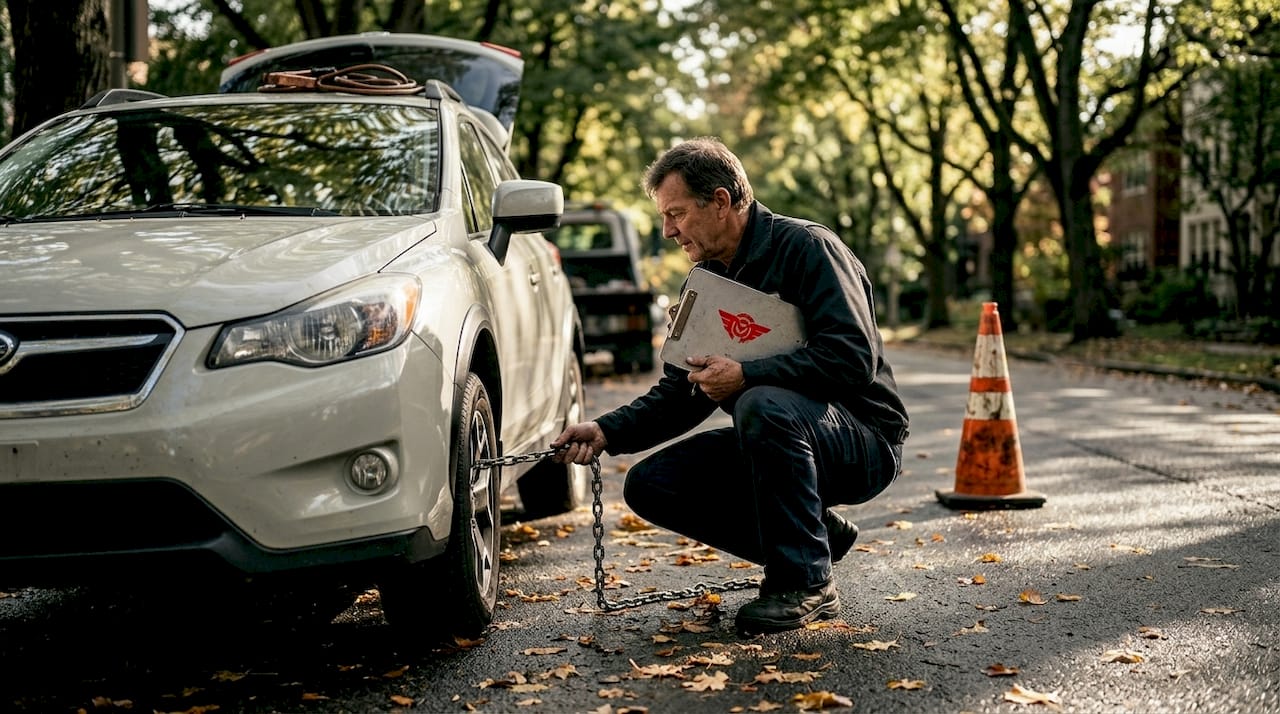
Bundled roadside assistance removes that risk. When these services are part of your extended warranty plan, one incident can pay back the entire annual value of the add-on. According to Consumer Reports data, incorporating roadside assistance into extended warranties enhances protection by covering non-repair emergencies like lockouts and fuel delivery, saving $100 or more per incident compared to out-of-pocket payments, and providing serious peace of mind for high-mileage or older vehicles.
The financial value is clear, but there's an emotional dimension here too. Being stranded is stressful. Being stranded with children, at night, in an unfamiliar area or in bad weather amplifies that stress significantly. Knowing you have a direct line to real help at any hour changes the experience entirely. Here's a look at the top ways roadside programs reduce everyday hassle:
- Eliminates frantic internet searches for local towing companies during stressful moments.
- Removes the need to negotiate prices or verify legitimacy of random service providers.
- Provides a single number to call regardless of where in the country you're driving.
- Speeds up response times through established provider networks.
- Reduces financial anxiety by eliminating unexpected emergency service bills.
As one industry observer on the topic of extended warranty signs puts it:
"For drivers with older or higher-mileage vehicles, the real value of an extended warranty often isn't in the major repair events, it's in the constant reassurance that whatever happens, there's a plan. Roadside coverage is the piece that makes that reassurance real."
That reassurance is not a luxury. For many vehicle owners, especially those who commute long distances or frequently travel in rural areas, it's an essential part of responsible vehicle ownership.
Comparing roadside: Warranty-bundled vs. AAA vs. insurance add-ons
You have more than one option when it comes to roadside assistance. Understanding how they compare helps you decide which setup fits your situation and budget best.
Here's a side-by-side comparison of the three most common approaches:
| Feature | Warranty bundled | AAA membership | Insurance add-on |
|---|---|---|---|
| Estimated annual cost | Included or low add-on | ~$100/year | $15 to $40/year |
| Coverage type | Vehicle-specific | Person-based (any vehicle) | Vehicle-specific |
| Towing distance | 15 to 100 miles | 100+ miles | Varies by insurer |
| Additional perks | Repair protection | Travel, hotel, discounts | None typically |
| Premium impact | No insurance rate effect | No insurance rate effect | Possible rate effect |
| Best for | Single vehicle owners | Multi-vehicle/travelers | Budget-conscious owners |
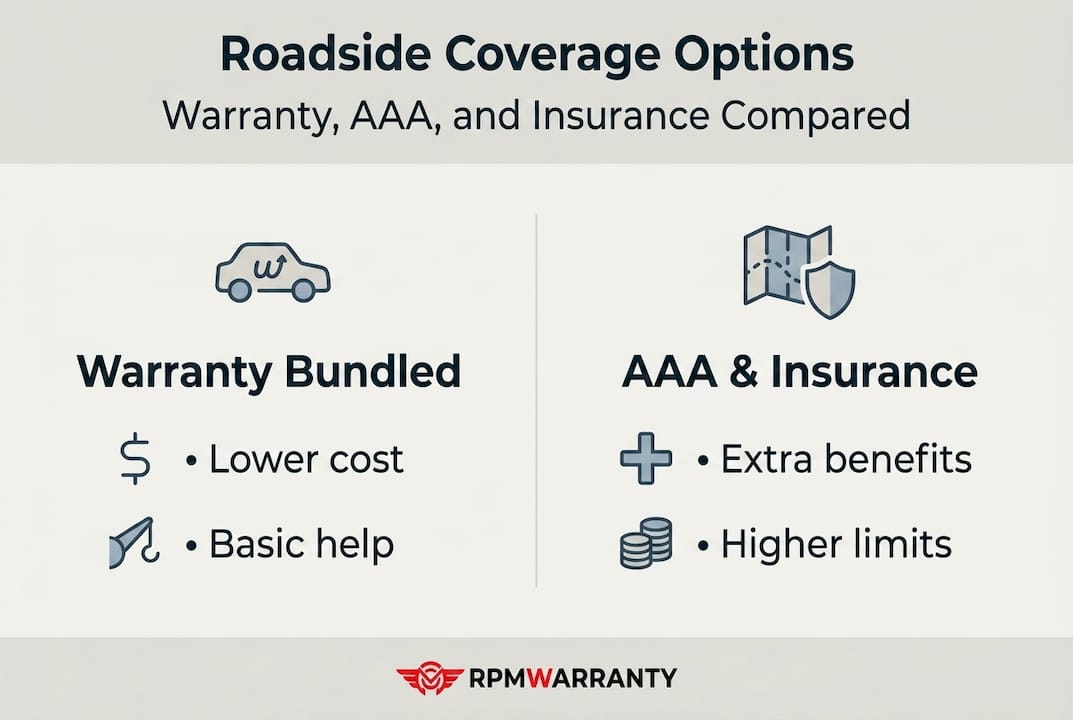
According to a cost breakdown, bundled roadside in warranties is often cheaper than a separate AAA membership at around $100 per year for vehicle-specific coverage, but AAA covers any vehicle the member is in, provides higher towing distances of 100 miles or more, and includes travel perks. Insurance add-ons are cheaper at $15 to $40 per year but are vehicle-tied and may affect your insurance rates.
Each option has real pros and cons:
Warranty bundled roadside:
- Pro: Integrated with your repair coverage for seamless claims
- Pro: Often no additional annual fee beyond the warranty itself
- Con: Coverage stays with the vehicle, not the person
- Con: May have stricter mileage caps than AAA
AAA membership:
- Pro: Coverage travels with you in any vehicle
- Pro: Generous towing limits and well-established provider network
- Con: Higher annual cost than most bundled options
- Con: Does not help with underlying repair costs
Insurance add-on:
- Pro: Usually the cheapest entry point for roadside coverage
- Con: Filing a roadside claim may affect your premium
- Con: Limited customization and often lower service caps
For drivers choosing warranty by year and vehicle type, bundled warranty roadside often hits the sweet spot of value. You get mechanical protection and emergency coverage in one package, which simplifies your financial planning and eliminates the need to manage multiple separate policies.
Pro Tip: Before adding roadside assistance through your auto insurance, call your insurer and ask directly whether filing a roadside claim would be recorded as an incident on your policy. Some insurers treat it neutrally; others do not.
Who benefits most and how do you maximize roadside coverage?
Roadside assistance is valuable for all drivers, but certain groups see outsized returns on the investment.
The roadside assistance market tells a compelling story. The roadside assistance market is growing from $31.9 billion to $52 billion largely because of aging vehicles, with cars older than 10 years old making up a growing share of the road. Roughly 12% of drivers have recently used roadside services for lockouts alone, underscoring how often these situations arise regardless of how well you maintain your vehicle.
Owners who benefit most include:
- Drivers with older or high-mileage vehicles. Wear on aging components increases the chance of a breakdown, battery failure, or flat tire at the worst possible time.
- Those who drive unreliable or discontinued brands. Some makes have known reliability gaps. A beginner's warranty guide can help you evaluate your specific vehicle's risk profile.
- Long-distance commuters. Spending more time on the road statistically increases exposure to incidents.
- Families who share one vehicle. When the car is your only transportation, being stranded has immediate ripple effects on work, school, and daily life.
According to Consumer Reports, extended warranties with roadside often cost more in premiums than the claims paid out for the average reliable vehicle. However, they deliver clear value for unreliable brands, older cars, and drivers who want certainty. The advice is to negotiate price and choose from reputable providers.
To get the best out of your roadside coverage, follow these practical steps:
- Read every limit in your roadside section. Know your towing mileage cap, per-incident limits, and fuel delivery policy before you ever need it.
- Negotiate during purchase. Many warranty providers have room to include enhanced roadside or raise mileage caps if asked directly.
- Choose established, transparent providers. A warranty is only as good as the company behind it. Review the warranty transparency guide to know the right questions to ask.
- Save the roadside number in your phone immediately. When you're stranded, the last thing you want to do is search for a number.
- Understand claim reimbursement vs. direct dispatch. Some plans send a provider to you; others require you to pay and submit a claim. Know which model your plan uses.
- Pair it with customizing your warranty. Selecting add-ons that fit your specific driving patterns makes your plan far more effective than a generic off-the-shelf policy.
If you own an RV or specialty vehicle, service needs differ considerably. Resources like RV repair warranty advice can point you toward coverage tailored to those specific needs.
The bottom line: if you're already paying for an extended warranty, adding or confirming bundled roadside coverage is almost always a low-cost upgrade with meaningful practical returns.
The overlooked reality: Why roadside assistance in warranties matters more than you think
Most people shopping for extended warranties go straight to the big-ticket question: will this cover a blown engine or a transmission failure? That's understandable. Those are expensive repairs. But in years of working in the vehicle protection space, what we've seen is that the calls causing the most day-to-day stress aren't about engine rebuilds. They're about being stuck.
A dead battery at 7 AM before a job interview. A lockout in a hospital parking lot. A flat tire on a dark highway with a car full of kids. These events aren't catastrophic mechanically, but emotionally and logistically, they are genuinely disruptive. And yet, many warranty shoppers see roadside coverage as optional, a nice extra rather than a core need.
The market data backs this up. With essential warranty features increasingly including roadside, providers recognize that customers experience more value from integrated emergency response than they often expect before buying.
There's also the "I maintain my car well" reasoning that leads some drivers to skip roadside. But battery failures, flat tires, and lockouts are not the result of poor maintenance. They're the result of normal life. No amount of oil changes prevents a nail in a tire or a key locked inside a car.
For the relatively small cost of adding roadside to a warranty plan, you're buying something you can't easily put a dollar figure on: the certainty that someone will answer when you call, help will arrive, and the situation will be resolved. That's worth more than it costs.
Ready to add peace of mind with the right warranty?
Now that you understand how roadside assistance works within an extended warranty, the next move is simple: find a plan that actually includes the coverage you need.
At RPM Warranty, we believe your protection plan should cover more than just repair bills. Our protection plans are designed to give you complete coverage, including roadside assistance, for the moments that matter most. Whether you're driving a high-mileage vehicle or simply want to make sure you're never caught off guard, we make it easy to compare your options and build a plan around your specific vehicle. Get a free warranty quote today and see how affordable real peace of mind can be.
Frequently asked questions
Does every extended car warranty include roadside assistance?
No, not all extended warranties offer roadside assistance. Coverage varies by provider and plan, so you need to ask specifically whether roadside is included or available as an add-on.
What services are most commonly included in warranty roadside assistance?
Most plans cover towing, jump-starts, flat tire help, lockout assistance, emergency fuel delivery (with you paying for the fuel), and winching for vehicles stuck in ditches or snow.
Is standalone roadside coverage like AAA always better than warranty-integrated assistance?
Not always. While AAA offers broader coverage for any vehicle a member rides in and higher towing limits, warranty bundled roadside is typically cheaper and works well for owners who only need coverage for their own vehicle.
How much can roadside events cost if not covered by a warranty?
A single tow averages around $109 without coverage, and services like lockouts or fuel delivery add up quickly, making a single year of incidents potentially cost several hundred dollars out of pocket.