
TL;DR:
- A free engine check provides diagnostic trouble codes that serve as a starting point for understanding vehicle issues but does not offer a complete diagnosis. Proper preparation, documentation, and follow-up with qualified repair shops are essential to effectively leverage these scans and avoid costly mistakes. Combining free scans with deeper diagnostics and extended warranty coverage helps owners manage repair costs and maintain vehicle reliability.
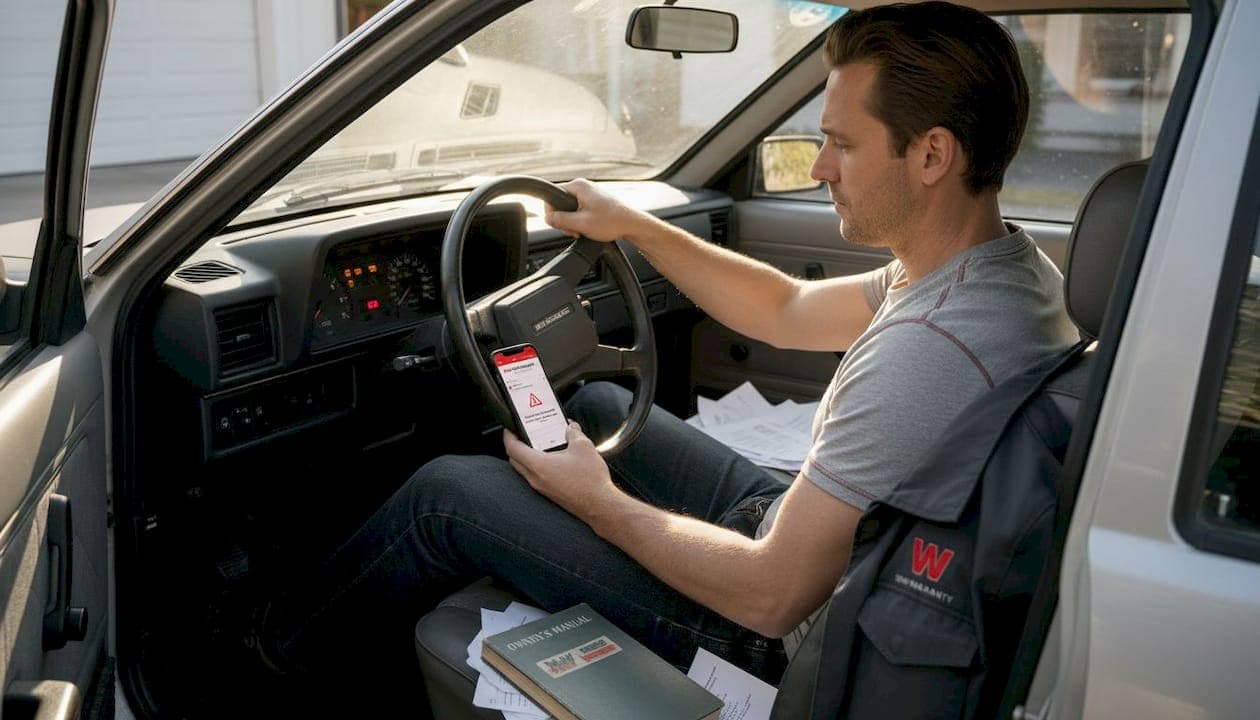
That moment your check engine light flicks on while merging onto the freeway is one of the most unsettling feelings in car ownership. Is it a $50 sensor or a $4,000 engine rebuild? You have no idea, and that uncertainty is exactly where costly mistakes happen. A free engine check gives you a concrete starting point, turning a vague warning into actual data you can act on. This guide walks you through what a free engine check really includes, how to prepare for one, how to use the results strategically, and how to avoid the traps that cost owners thousands every year.
Table of Contents
- Understanding what a free engine check really is
- What you need before using a free engine check
- Step-by-step: How to leverage a free engine check
- Common pitfalls and troubleshooting after a free engine check
- Why a free engine check is empowering—but not enough alone
- Connect your free engine check to extended warranty protection
- Frequently asked questions
Key Takeaways
| Point | Details |
|---|---|
| Know the limits | A free engine check is an OBD-II code read, not a full diagnosis. |
| Prepare documentation | Bring vehicle info and symptom notes to maximize your free check’s usefulness. |
| Ask for next steps | Request recommendations on additional checks before any repairs. |
| Use scan reports smartly | Share results with warranty providers to support coverage claims. |
| Avoid costly guesswork | Don’t replace parts based only on scan codes—get a complete diagnosis first. |
Understanding what a free engine check really is
When most drivers hear "free engine check," they picture a technician popping the hood, listening to the engine, and delivering a verdict. The reality is a bit more specific, and knowing the difference protects your wallet.
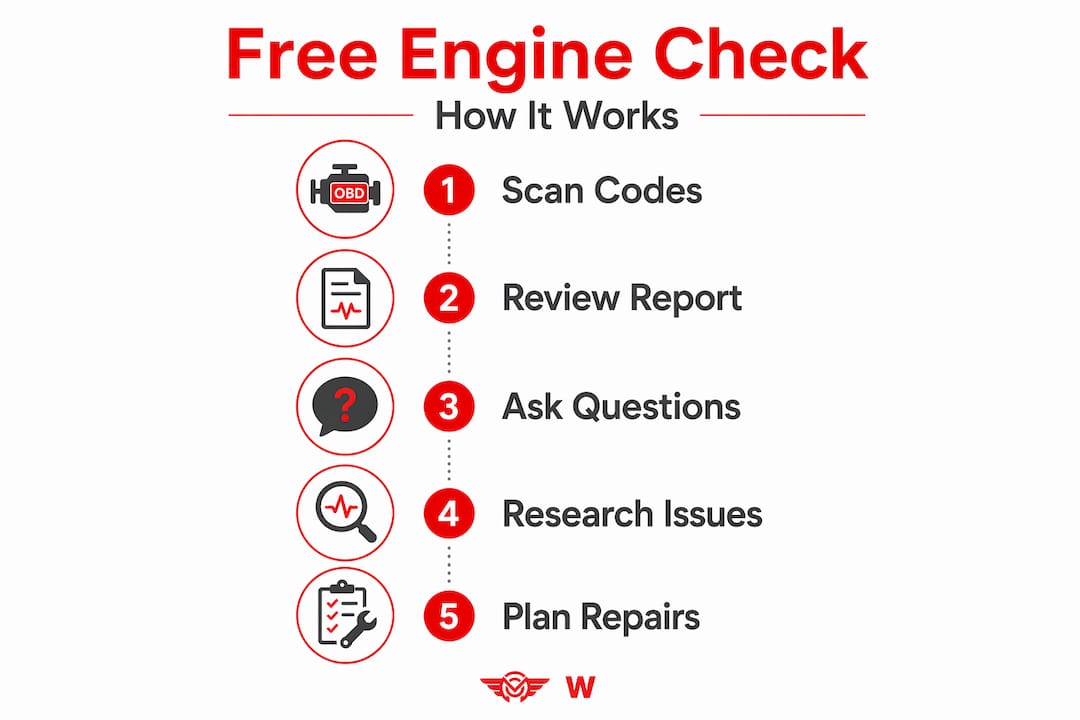
A free OBD-II scan reads the diagnostic trouble codes (DTCs) that your car's onboard computer has stored. OBD-II stands for On-Board Diagnostics, second generation, and every vehicle sold in the United States since 1996 has this system built in. When a sensor detects a problem outside its normal range, it trips a code and lights up that amber dashboard warning.
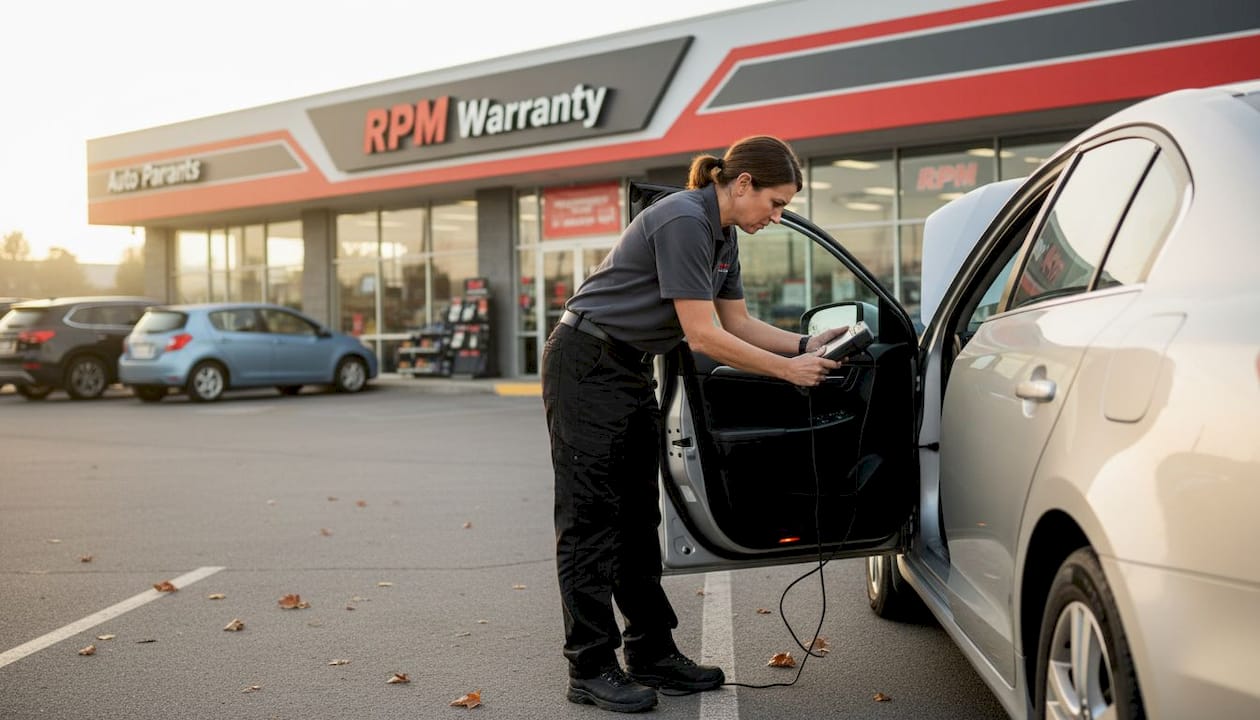
The scan itself takes less than five minutes. A technician or store associate plugs a scanner into the OBD-II port (usually located under the driver-side dashboard), and the device pulls up a list of codes with short descriptions. Common examples include P0420 (catalyst system below threshold) or P0300 (random/multiple cylinder misfire).
Here is what a free engine check typically includes versus what it does not:
| What's usually included | What's usually NOT included |
|---|---|
| Reading active and stored DTCs | Live data stream analysis |
| Brief code description | Component testing (e.g., fuel injectors) |
| Emissions-related code flags | Wiring harness inspection |
| Basic freeze-frame snapshot (sometimes) | Full driveability diagnosis |
| Printed or emailed code report | Repair estimate with root cause |
That distinction matters enormously. A check engine light caused by non-engine issues such as an emissions sensor fault, a small vacuum leak, or an intermittent misfire still requires interpretation beyond a simple code list. The code tells you what the computer noticed; it does not automatically tell you why it happened or which component to replace.
Think of it like a smoke alarm. When it goes off, you know there may be a fire somewhere in the building. You still need to walk the building to find the source. The code is the alarm; the diagnosis is the walkthrough.
Understanding engine warranty coverage becomes relevant here because many warranty claims require you to demonstrate that a proper diagnostic process was followed. A code scan alone rarely satisfies that requirement. Before assuming your repair is covered, it helps to understand how vehicle service contracts define "diagnosis" and what documentation they expect.
Key takeaways from this section:
- A free engine check reads DTCs, not your full vehicle health
- Codes are a starting point, not a final answer
- Knowing what you are getting helps you ask better questions at the shop
What you need before using a free engine check
Walking into a shop unprepared means you get less out of the scan. A little prep work turns a five-minute code pull into genuinely useful information.
Information to bring with you:
- Vehicle Identification Number (VIN), found on the dashboard corner or inside the driver-side door frame
- Year, make, model, and trim level
- Current mileage
- A list of any symptoms you have noticed (rough idle, stalling, reduced power, unusual smells)
- How long the check engine light has been on and whether it is steady or flashing
- Any recent repairs or parts replacements in the last 3,000 to 5,000 miles
A flashing check engine light, in particular, signals a more urgent problem such as an active misfire that can damage the catalytic converter. That detail changes how fast you need to act.
The free scan methodology that works best follows a clear sequence: obtain the DTCs, note whether codes are active versus stored or pending, ask if any additional checks are recommended before parts replacement, and bring the summary to a qualified shop. That last step is often skipped, and it is exactly where people waste money.
| Prep step | Why it matters |
|---|---|
| Bring the VIN | Ensures accurate code lookup for your specific vehicle |
| Log symptoms | Helps correlate codes to real behavior patterns |
| Note code status (active vs. stored) | Active codes mean ongoing issues; stored codes may be intermittent |
| Ask about live data review | Reveals sensor readings that static codes cannot |
| Confirm shop's scope of free check | Prevents surprise charges and misunderstandings |
Pro Tip: Before your free scan, take a five-minute video from the driver's seat showing the dashboard lights, any unusual sounds, and how the vehicle behaves at idle. This footage gives the technician context that a code list alone cannot provide.
Being prepared also positions you to understand the next steps for your vehicle. If the codes point toward a covered system, checking car maintenance tips can help you stay ahead of additional issues. If the scan reveals patterns of wear or neglect, that could be an important signal to evaluate extended warranty signs before a bigger repair hits.
Step-by-step: How to leverage a free engine check
Once you are prepared, the process itself is straightforward. But how you handle the information after the scan determines whether you save money or spend it.
Step 1: Get the scan done and ask for a printed or emailed report. Do not leave with just a verbal summary. You need a written record of every code, its status (active or pending), and the freeze-frame data if available. This document becomes your evidence file.
Step 2: Ask specific questions during the scan. Good questions include: "Are these codes active or stored?" "What systems could cause this code?" "Do you recommend any live data analysis before I take this to a repair shop?" The answers shape your next move.
Step 3: Research the codes before authorizing repairs. Look up each DTC using reliable automotive databases. Understand the range of causes before agreeing to replace any parts. A P0171 (system too lean, bank 1) could mean a dirty mass airflow sensor, a vacuum leak, a weak fuel pump, or a clogged fuel injector. The code does not pick the part.
Step 4: Bring the report to a qualified repair shop for deeper diagnosis. This is the critical handoff. Give the shop your written code report, your symptom notes, and your vehicle history. Ask them to confirm the root cause with live data and component testing before quoting repairs. Many shops offer a paid diagnostic for $80 to $150 that can save you from replacing the wrong part.
Step 5: Document everything for a potential warranty claim. Record check engine repair costs have hit record highs, meaning one misdiagnosis can set you back significantly. Keep every invoice, scan report, and repair estimate. If you have an extended warranty, this paper trail is what gets your claim approved.
"The code tells you where to look. The diagnosis tells you what to fix. Skipping from the first to a parts order is how owners burn hundreds of dollars on the wrong repair."
Pro Tip: Ask for freeze-frame data along with your DTC codes. Freeze-frame captures the sensor readings at the exact moment the fault was triggered, giving a qualified technician a much clearer picture of operating conditions when the problem occurred.
Following this process positions you to cut repair costs in 2026 rather than add to them. It also feeds directly into your vehicle protection checklist, giving you documented proof that you addressed issues proactively.
Common pitfalls and troubleshooting after a free engine check
A free scan is only as valuable as what you do with it. Many owners walk out of the store, look up the code online, buy a part, and install it themselves. Sometimes that works. Often it does not, and the original problem remains while the check engine light returns within days.
Mistakes that cost owners money:
- Replacing parts based solely on the code without verifying the root cause
- Ignoring stored or pending codes because the light went off on its own
- Assuming one code means one problem (multiple codes often share a root cause)
- Failing to recheck codes after a repair to confirm the fix worked
- Not bringing the scan report to the next shop visit
Free inspections and scans serve a real purpose as a first filter, but they are primarily a marketing-friendly entry point. They work best when followed up by a technician who can perform live data analysis, inspect wiring connectors, check for vacuum leaks visually, and run component-level tests. Complex electrical faults, intermittent driveability issues, and module-related problems almost always require more than a code pull.
Warranty eligibility adds another layer of urgency here. Extended warranty providers typically require documented proof that a repair was diagnosed and performed by a qualified technician. A scan report alone rarely satisfies that requirement. If you skip the deeper diagnostic step, you risk having a legitimate repair claim denied.
Pro Tip: If your check engine light returns within a week of a repair, go back to the shop immediately. A recurring code after a fix usually means the wrong component was replaced or the root cause was not fully addressed. Do not pay twice for the same problem.
Understanding car repair cost tips helps you negotiate from a position of knowledge rather than desperation. And when comparing the potential cost exposure across different vehicle types, a car repair costs comparison can show you just how dramatically repair bills vary by make and model. Building your awareness around vehicle protection features ensures you know which systems are covered before a problem escalates.
Why a free engine check is empowering—but not enough alone
There is something genuinely satisfying about walking into an auto parts store, getting your codes pulled for free, and walking out knowing what those letters and numbers mean. It puts information in your hands instead of leaving you dependent on a service writer's description. That matters. A lot of the financial stress around car repairs comes from not knowing what you are dealing with.
But here is the part most articles skip: a free scan only protects you if you actually use the information correctly. We see too many vehicle owners treat the code printout as a final answer rather than the first question. They order parts, install them, and then call us when the repair did not hold and their extended warranty claim is in question because no qualified diagnosis was ever performed.
The honest truth is that a free engine check is the beginning of a responsible ownership process, not the end of it. It is the check that tells you something deserves attention. The extended warranty is the protection that ensures "something deserves attention" does not become "I cannot afford to fix this." Together, they form a defense strategy rather than a reactive scramble.
We also think the conversation around free scans undersells one major benefit: they reveal patterns. A vehicle that keeps tripping the same code category, say fuel system or evaporative emissions, is telling you something about its maintenance history. That pattern is worth taking to a technician and, potentially, to your auto warranty guide to understand whether your current protection plan covers the systems that keep flagging issues.
The most financially secure vehicle owners we see are the ones who combine easy, accessible tools like free scans with deeper diagnostics and meaningful coverage. Neither alone is enough. Used together, they create a cycle of proactive care that keeps repair bills manageable and vehicles on the road longer.
Connect your free engine check to extended warranty protection
You now know how to use a free engine check strategically, from preparation through documentation. The next question is how to make sure those scan results actually translate into financial protection when a covered repair is needed.
At RPM Warranty, our extended vehicle warranty plans are built around exactly this kind of proactive vehicle ownership. When you come to us with a documented scan history and repair record, claims processing is smoother and faster. Our Elite, Advanced, and Essential plans cover the components most likely to generate those check engine codes, including engines, transmissions, cooling systems, and electrical systems. Explore our vehicle protection plans to find coverage matched to your vehicle's year, make, and model. When you are ready to take action, request a free quote and see exactly what your vehicle qualifies for. Your free engine check is the first step. We help make sure it leads somewhere.
Frequently asked questions
Does a free engine check diagnose all issues with my car?
No. A free OBD-II scan reads diagnostic codes and highlights possible trouble areas, but it does not provide a full detailed diagnosis or confirm which specific component needs repair.
Will a free engine check help me with warranty claims?
It often provides the initial report necessary for warranty eligibility, but most claims require a deeper diagnostic. The most effective scan methodology includes getting DTCs, checking code status, and taking the report to a qualified shop before any repair is authorized.
What common mistakes should I avoid after a free engine check?
Avoid replacing parts based solely on code readings. Because a check engine light can indicate non-engine faults like sensor errors or vacuum leaks, always get live data and component testing from a qualified technician before spending money on parts.
How much can a free engine check save me?
It can prevent unnecessary repairs and help you prioritize the right work. With check engine repair costs reaching record highs, catching and correctly diagnosing a problem early is one of the most direct ways to avoid a four-figure repair bill.